Translate

Showing posts with label buddhism. Show all posts

Saturday, October 29, 2011

THE CLEAR PATH - BUDDHA

.
.
All is transient.
When you perceive this, you are above suffering.
The Path is clear.
.
.
All is suffering
When you perceive this, you are above suffering.
The path is clear.
.
.
All is unreal.
When you perceive this, you are above suffering.
The path is clear.
.
The Buddha
.
.
.
.

Tuesday, July 26, 2011

THE ZEN VOWS

.
.
Though the many beings are numberless,
I vow to save them.
Though greed, hatred, and ignorance rise endlessly,
I vow to cut them off.
Though the Dharma is vast and fathomless,
I vow to understand it.
Though Buddha's Way is beyond attainment,
I vow to embody it fully.

Read more: http://www.beliefnet.com/
.
.
.
.

Wednesday, July 13, 2011

THE HIGHEST FORM OF PRAYER

.
.
.
"Ye have heard that it hath been said,
Thou shalt love thy neighbor, and hate thine enemy.
But I say unto you, Love your enemies,
bless them that curse you, do good to them that hate you,
and pray for them which despitefully use you,
and persecute you;
that ye may be the children of your Father who is in heaven:
for he maketh his sun to rise on the evil and on the good,
and sendeth rain on the just and on the unjust."
Matthew 5:43-45
.
 .
.
.
"Many people pray to God because they want God
to fulfill some of their needs.  If they want to have a
picnic, they ask God for a clear, sunny day.  At the same
time, farmers might pray for rain.  If the weather is clear,
the picnickers will say, "God is on our side; he answered
our prayers."  But if it rains, the farmers will say that
God heard their prayers.  This is the way we usually pray.
.
.
.
When you pray only for your own picnic and not for
the farmers who need the rain, you are doing the opposite
of what Jesus taught.  Jesus said,
"Love your enemies, bless them that curse you..."
When you look deeply into your anger, you will see
that the person you call your enemy is also suffering.
As soon as you see that, the capacity of accepting and
having compassion for him is there.
Jesus called this "loving your enemy."
.
.
.
.
.
When you are able to love your enemy,
he or she is no longer your enemy.  The idea
of "enemy" vanishes and is replaced by the notion of
someone who is suffering and needs your compassion.
.
.
Doing this is sometimes easier than you might have
imagined, but you need to practice.  If you read the Bible
but don't practice, it will not help much.
In Buddhism, practicing the teaching of the Buddha
is the highest form of prayer.  The Buddha said,
"If someone is standing on one shore and wants
to go to the other shore, he has to either use a boat
or swim across.  He cannot just pray, 'Oh, other shore,
please come over here for me to step across!' "
.
.
To a Buddhist, praying without practicing
is not real prayer."
.
From Living Buddha, Living Christ
Thich Nhat Hanh
.
.

Thursday, May 5, 2011

UNDERSTANDING BRINGS COMPASSION

.
.
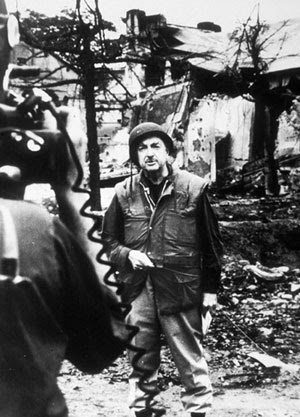
Before the Vietnamese monk
Thich Quang Duc burned himself alive
in 1963, he meditated for several weeks and
then wrote very loving letters to his government,
his church, and his fellow monks and nuns
explaining why he had reached that decision.
.
.
When you are motivated by love and
the willingness to help others attain
understanding, even self-immolation can be
a compassionate act.  When Jesus allowed
Himself to be crucified, He was acting
in the same way, motivated by the desire
to wake people up, to restore understanding
and compassion, and to save people.
.
.
When you are motivated by anger
or discrimination, even if you act in
exactly the same way, you are doing
the opposite.
When you read Thich Quang Duc's
letters, you know very clearly that he
was not motivated by the wish to oppose
or destroy but by the desire to communicate.
When you are caught in a war in which the
great powers have huge weapons and complete
control of the mass media, you have to do
something extraordinary to make yourself heard.
.
.
.
.
Without access to radio, television,
or the press, you have to create new ways
to help the world understand the situation
you are in.  Self-immolation can be
such a means.
.
.
If you do it out of love,
you act very much as Jesus did on the cross
and as Gandhi did in India.  Gandhi fasted,
not with anger, but with compassion,
not only toward his countrymen but also
toward the British.
.
. 
 These great men all
knew that it is the truth that sets us free,
and they did everything they could
to make the truth known.
Buddhist and Christian practice
is the same - the truth about ourselves,
the truth about our brothers and sisters,
the truth about our situation.
.
.
This is the work of writers,
preachers, the media, and also
practicioners.  Each day we practice
looking deeply into ourselves and into
the situation of our brothers and sisters.
It is the most serious work we can do.
.
From Living Buddha, Living Christ
by Thich Nhat Hanh
.
.
.

Monday, March 7, 2011

JESUS AND THE BUDDHA

.
. .
Edited from the preface to Jesus and Buddha -
The Parallel Sayings
by Marcus Borg
*
 I have sometimes said that if the Buddha
and Jesus were to meet, neither would try to convert the other - not because they would regard such an effort as hopeless, but because they would recognize one another.
.
 Jesus and the Buddha were teachers of wisdom.
Wisdom is not just about moral behavior, but about the "center," the place from which moral perception and moral behavior flow.
Jesus and the Buddha were teachers of a world-subverting wisdom that undermined and challenged conventional ways of seeing and being in their time and in every time. Their subversive wisdom was also an alternative wisdom: they taught a way or path of transformation.
.
 They both were teachers of the way less traveled.
What Jesus and the Buddha said about "the way"
is remarkably similar.
*
 Published in 1997, Jesus and Buddha -
The Parallel Sayings
is an excellent text for comparisons between the teachings of these two religious paths. The similarities are amazing.
 .
.
Do to others as you would have them do to you.
*
Luke 6:31
.

 Consider others as yourself.
*
Dhammpada 10:1
 .
.
Do not store up for yourselves treasures
on earth, where moth and rust consume and where thieves break in and steal; but store up for yourselves treasures in heaven, where neither moth nor rust consumes and where thieves do not break in and steal.
*
Matthew 6:19-20
 .
Let the wise man do righteousness:
A treasure that others can not share, where no thief can steal; a treasure which does not pass away.
*
Khuddakapatha 8:9
 . .
The kingdom of heaven is like treasure
hidden in a field, which someone found and hid; then in his joy he goes and sells all that he has and buys that field.
*
Matthew 13:44
 .
 If by giving up limited pleasures
one sees far-reaching happiness, the wise one leaves aside limited pleasures, looking to far-reaching happiness.
*
Dhammmapada 21:1
.


.
Truly I tell you, if you have faith the size
of a mustard seed, you will say to this mountain,
"Move from here to there," and it will move,
and nothing will be impossible for you.
*
Matthew 17:20
.
A monk who is skilled in concentration can
cut the Himalayas in two.
*
Anguttara Nikaya 6:24
.
.
.

Thursday, February 17, 2011

BUDDHIST PRAYER EXPLAINED

.

.
Prayer should be part of our spiritual journey,
transforming confusion into clarity and suffering into joy. However, some mistakenly believe that the Absolute is separate and/or different from us. Believing this, their prayers ask for favors, such as health, salvation, fame, victory or the winning lottery numbers. They use prayer in order to manipulate their God to work for their benefit. Wanting Him to play favorites, they beg to be blessed by Him at the expense of others. However, this attitude defeats the power of prayer. We believe that in order for prayer to be effective it must be devoid of any self-centeredness and calculation, relying strictly on great compassion. It should be done to strengthen and open our hearts, and to benefit all beings. Buddhist prayer has nothing to do with begging for personal worldly or heavenly gains.
.

.
Buddhist prayer is a practice to awaken our
inherent inner capacities of strength, compassion and wisdom rather than to petition external forces based on fear, idolizing, and worldly and/or heavenly gain. Buddhist prayer is a form of meditation; it is a practice of inner reconditioning. Buddhist prayer replaces the negative with the virtuous and points us to the blessings of Life.
.
.
For Shin Buddhists, prayer expresses an aspiration
to pull something into one's life, like some new energy or purifying influence and share it with all beings. Likewise, prayer inspires our hearts towards wisdom and compassion for others and ourselves. It allows us to turn our hearts and minds to the beneficial, rousing our thoughts and actions towards Awakening. If we believe in something enough, it will take hold of us. In other words, believing in it, we will become what we believe. Our ability to be touched like this is evidence of the working of Great Compassion within us.
.
.
What's more, it can a function as a form of self-talking or self-therapy in which one mentally talks through a problem, or talks through it aloud, in the hope that some new insight will come or a better decision can be made. Prayer therefore frequently has the function of being part of a decision-making process.
.
.
The wonderful thing about prayer practice is that
 we can do it everywhere and anytime, transforming the ordinary and mundane into the Path of Awakening. Prayer enriches our lives with deep spiritual connection and makes every moment special, manifesting the Pure Land here and now.
.
.
Below is an example of our most popular prayer adapted
 from Shatideva's 8th century Indian prayer.
.
Metta Karuna Prayer
.
Oneness of Life and Light,
Entrusting in your Great Compassion,
May you shed the foolishness in myself,
Transforming me into a conduit of Love.

.
May I be a medicine for the sick and weary,
Nursing their afflictions until they are cured;
May I become food and drink,

During time of famine,
May I protect the helpless and the poor,
May I be a lamp,.

For those who need your Light,
May I be a bed for those who need rest,
and guide all seekers to the Other Shore.

.
May all find happiness through my actions,
and let no one suffer because of me.
Whether they love or hate me,
Whether they hurt or wrong me,
May they all realize true entrusting,
Through Other Power,
and realize Supreme Nirvana.
Namo Amida Buddha
.
by Senpai Sensai
Buddhist Faith Fellowship
.
.

Monday, January 31, 2011

RELIGION IN TIBET

.
.

.

.
.

.
.
From THE URANTIA BOOK
Part III, 94, 10
.
In Tibet may be found the strangest association
of the Melchizedek teachings combined with Buddhism,
Hinduism, Taoism, and Christianity.
When the Buddhist missionaries entered Tibet, they
encountered a state of primitive savagery very similar
to that which the early Christian missionaries
found among the northern tribes of Europe.
These simple-minded Tibetans would not
wholly give up their ancient magic and charms.
.
Examination of the religious ceremonials of
present-day Tibetan rituals reveals an
overgrown brotherhood of priests with shaven
heads who practice an elaborate ritual embracing
bells, chants, incense, processionals, rosaries,
images, charms, pictures, holy water, gorgeous
vestments, and elaborate choirs.
They have rigid dogmas and crystallized creeds,
mystic rites and special fasts.
.
.

Their hierarchy embraces monks, nuns,
abbots, and the Grand Lama. They pray to angels,
saints, a Holy Mother, and the gods. They practice
confessions and believe in purgatory.
Their monasteries are extensive and their
cathedrals magnificent. They keep up an
endless repetition of sacred rituals and believe
that such ceremonials bestow salvation.
Prayers are fastened to a wheel, and with
its turning they believe the petitions
become efficacious.
.
 Among no other people of
modern times can be found the observance of
so much from so many religions;
and it is inevitable that such a cumulative liturgy
would become inordinately cumbersome
and intolerably burdensome.
.


.

.

.
.
The Tibetans have something of all the
leading world religions except the simple teachings
of the Jesusonian gospel: sonship with God,
brotherhood with man, and ever-ascending citizenship
in the eternal universe.
.
 .

.
(It should be noted that THE URANTIA BOOK passage
came out in the first half of the 20th century, and
cannot account for the current state of
religious evolution in Tibet.)
.
.