
.

.
*
.
Good music for looking the post over. *
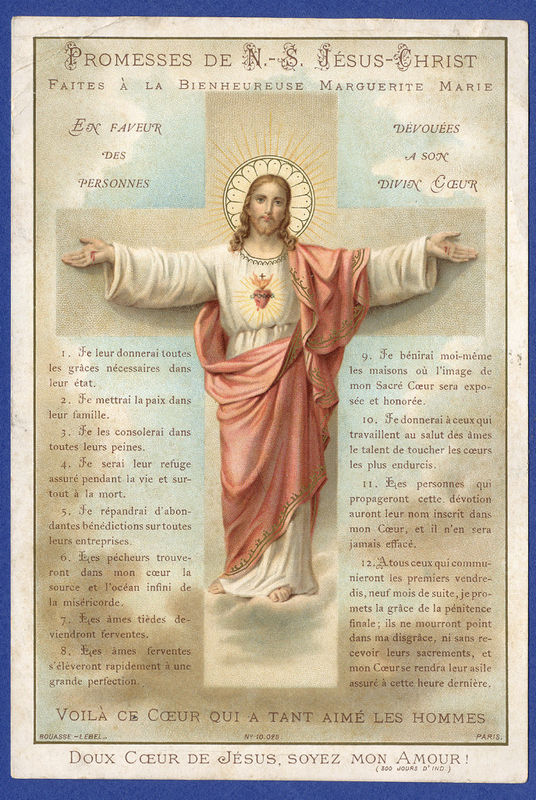
In the Catholic tradition, holy cards or prayer cards
are small, devotional pictures mass-produced for the use of the
faithful. They typically depict a religious scene or a saint in an
image about the size of a playing card. The reverse typically
contains a prayer, some of which promise an indulgence for its
recitation. The circulation of these cards is an important part
of the visual folk culture of Roman Catholics.
are small, devotional pictures mass-produced for the use of the
faithful. They typically depict a religious scene or a saint in an
image about the size of a playing card. The reverse typically
contains a prayer, some of which promise an indulgence for its
recitation. The circulation of these cards is an important part
of the visual folk culture of Roman Catholics.
.
 .
.

.

.

.

.
Old master prints, nearly all on religious subjects, served
many of the same functions as holy cards, especially the
cheaper woodcuts; the earliest dated surviving example is from
1423, probably from southern Germany, and depicts Saint
Christopher, with handcolouring, it is found as part of the
binding of a manuscript of the Laus Virginis (1417) which
belongs to the John Rylands Library, Manchester. Later
engraving or etching were more commonly used. Some had
elaborate borders of paper lace surrounding the images; these
were called dévotes dentelles in France.
many of the same functions as holy cards, especially the
cheaper woodcuts; the earliest dated surviving example is from
1423, probably from southern Germany, and depicts Saint
Christopher, with handcolouring, it is found as part of the
binding of a manuscript of the Laus Virginis (1417) which
belongs to the John Rylands Library, Manchester. Later
engraving or etching were more commonly used. Some had
elaborate borders of paper lace surrounding the images; these
were called dévotes dentelles in France.
.

.
The invention of colour lithography made it
possible to reproduce coloured images cheaply, leading to a
much broader circulation of the cards. An early centre of their
manufacture was in the environs of the Church of St Sulpice in
Paris; the lithographed images made there were done in
delicate pastel colours, and proved extremely influential on
later designs. Belgium and Germany also became centres of the
manufacture of holy cards, as did Italy in the twentieth
century. Catholic printing houses (such as Maison de la Bonne
Presse in France and Ars Sacra in Germany) produced large
numbers of cards, and often a single design was printed by
different companies in different countries.
possible to reproduce coloured images cheaply, leading to a
much broader circulation of the cards. An early centre of their
manufacture was in the environs of the Church of St Sulpice in
Paris; the lithographed images made there were done in
delicate pastel colours, and proved extremely influential on
later designs. Belgium and Germany also became centres of the
manufacture of holy cards, as did Italy in the twentieth
century. Catholic printing houses (such as Maison de la Bonne
Presse in France and Ars Sacra in Germany) produced large
numbers of cards, and often a single design was printed by
different companies in different countries.
.

.
.


Special holy cards are printed for Roman Catholics to be
distributed at funerals; these are "In memoriam cards", with
details and often a photograph of the person whom they
commemorate as well as prayers printed on the back. Other
specialized holy cards record baptisms, confirmations, and
other religious anniversaries. Others are not customized, and
are circulated to promote the veneration of the saints and
images they bear.
distributed at funerals; these are "In memoriam cards", with
details and often a photograph of the person whom they
commemorate as well as prayers printed on the back. Other
specialized holy cards record baptisms, confirmations, and
other religious anniversaries. Others are not customized, and
are circulated to promote the veneration of the saints and
images they bear.
.
 .
.

.
.
 .
.
 .
.


At the end of the nineteenth century, some
Protestants attempted to answer these Roman Catholic images
with similar images of their own. They produced Bible cards or
Sunday school cards, with lithographed illustrations depicting
Bible stories and parables, more modern scenes of religious life
or prayer, or sometimes just a Biblical text illuminated by
calligraphy; these were linked to Biblical passages that related
to the image.
Protestants attempted to answer these Roman Catholic images
with similar images of their own. They produced Bible cards or
Sunday school cards, with lithographed illustrations depicting
Bible stories and parables, more modern scenes of religious life
or prayer, or sometimes just a Biblical text illuminated by
calligraphy; these were linked to Biblical passages that related
to the image.
.
.
.
The reverse typically held a sermonette instead of a
prayer. Imagery here was always the servant of text, and as
such these Protestant cards tended to be replaced by tracts
that emphasized message instead of imagery, and were
illustrated with cartoon-like images if they were
illustrated at all.
prayer. Imagery here was always the servant of text, and as
such these Protestant cards tended to be replaced by tracts
that emphasized message instead of imagery, and were
illustrated with cartoon-like images if they were
illustrated at all.
.
From Wikipedia
.


.
.
.

.
.
.
.

.
.

.
The Order of Catholic nuns called the Poor Clares,
the sisterhood counterpart to the all-male Franciscan Order,
has a free e-card service with religious imagery and messages
for holy days, birthdays, events, get-well, and more.
See them here:
.
.


